


Asbestos roof overcladding generally costs within an indicative range of £60 to £120 per square metre in the UK, though final figures depend on specification, insulation targets, roof profile, and site-specific conditions. Liquid encapsulation offers a lower-tier entry point, while complete insulated composite panel systems sit at the higher end of the spectrum. Overall, overcladding an asbestos-cement roof typically offers significant savings compared to a full tear-off, largely because it minimizes heavy hazardous disposal fees and operational downtime.
At Orange Eco Roofing, we provide a complete suite of roofing services—ranging from traditional slate, tile, and pitched roof repairs to large-scale commercial, industrial, and agricultural roof refurbishment. Overcladding allows property owners to stabilize aging asbestos-cement roofs, upgrade thermal performance, and create a solar-ready structure for commercial solar PV integration without halting daily operations.
Asbestos Roof Overcladding Cost by Method

The price of overcladding an asbestos roof varies depending on the level of weatherproofing, structural specification, and insulation required:
- Liquid Encapsulation: A specialized coating applied over existing asbestos-cement sheets to seal minor surface weathering and bind fibers. While it offers a lower upfront cost, it provides a shorter extended service life (typically 10 to 20 years depending on system choice) and adds no thermal insulation.
- Single-Skin Overcladding: Involves installing a structural spacer grid over the existing roof, followed by single-skin steel or aluminum sheets. This delivers durable weather protection with a multi-decade operational lifespan, though thermal improvements remain minimal unless paired with insulation layers.
- Composite and Insulated Overcladding: Uses an engineered spacer system filled with dense insulation, covered by a high-grade outer profiled sheet. Sitting at the top of the price scale, this method delivers long-term durability (often 30+ years subject to material guarantees and maintenance), helps satisfy UK Building Regulations for thermal efficiency, and significantly reduces heating costs.
What is Included in the Price
A comprehensive commercial quote for asbestos overcladding covers more than basic materials. High-end composite overcladding pricing reflects a complete system: safety netting installed under the roof line, a structural bar grid system, thick insulation layers, dual-layered outer sheeting, and custom flashing trims.
What Affects Asbestos Roof Overcladding Cost?

Several practical factors dictate where your project lands within indicative pricing ranges:
- Roof size and scale: Large industrial warehouses and agricultural farm buildings benefit from economies of scale, lowering the per-square-metre rate compared to smaller commercial units.
- Health and safety controls: Safety netting, edge protection, scaffolding, and appropriate asbestos controls vary based on the nature of the work and building layout.
- Structural frame condition: If underlying steel purlins or timber framework require strengthening before taking secondary roof loads, overall project scope increases.
- Insulation targets: Meeting modern Building Regulations (Part L) requires thicker insulation layers, raising material costs while providing substantial long-term energy savings.
Is it expensive to replace an asbestos roof? Stripping and disposing of asbestos-cement sheets carries significant costs due to strict environmental controls and hazardous waste transport fees. Overcladding avoids these removal charges, making it a highly cost-effective alternative for structurally sound roofs.
Overcladding vs. Full Asbestos Removal: Which Costs Less?
 Can you overclad an asbestos roof? Yes, provided the existing roof sheets and structural frame are evaluated and confirmed capable of supporting a secondary framework.
Overcladding consistently costs less than full asbestos removal because it avoids hazardous disposal fees per tonne. Full strip-and-replace projects require specialized hazardous waste skips, licensed disposal sites, and often complete facility shutdowns.
Overcladding is ideal for commercial, industrial, and agricultural buildings where you want to maintain daily business operations while upgrading the roof. While overcladding does not eliminate asbestos fiber risk entirely, keeping the existing roof in place with appropriate controls and disturbance-free installation methods minimizes exposure risk safely. Full removal is generally reserved for roofs that are severely failing or structurally unsafe.
Also Read : Roof Repair Cost?
Labour and Regulatory Requirements for Asbestos Overcladding

Labor and safety setup make up a substantial portion of the project cost. Depending on the specific type of asbestos material present and the exact nature of the work, appropriate asbestos controls and qualified personnel are required by UK safety regulations. In many cases involving non-licensed asbestos-cement roofing, specialist contractors trained in asbestos awareness and safe working practices carry out the installation without requiring a full HSE license, though strict safety procedures still apply.
Project duration varies according to scale—smaller commercial units or farm buildings may take several days, while extensive industrial complexes can span a few weeks. Always request an itemized breakdown that clearly outlines labor, safety setup, materials, and waste management.
Is Overcladding an Asbestos Roof Worth It?
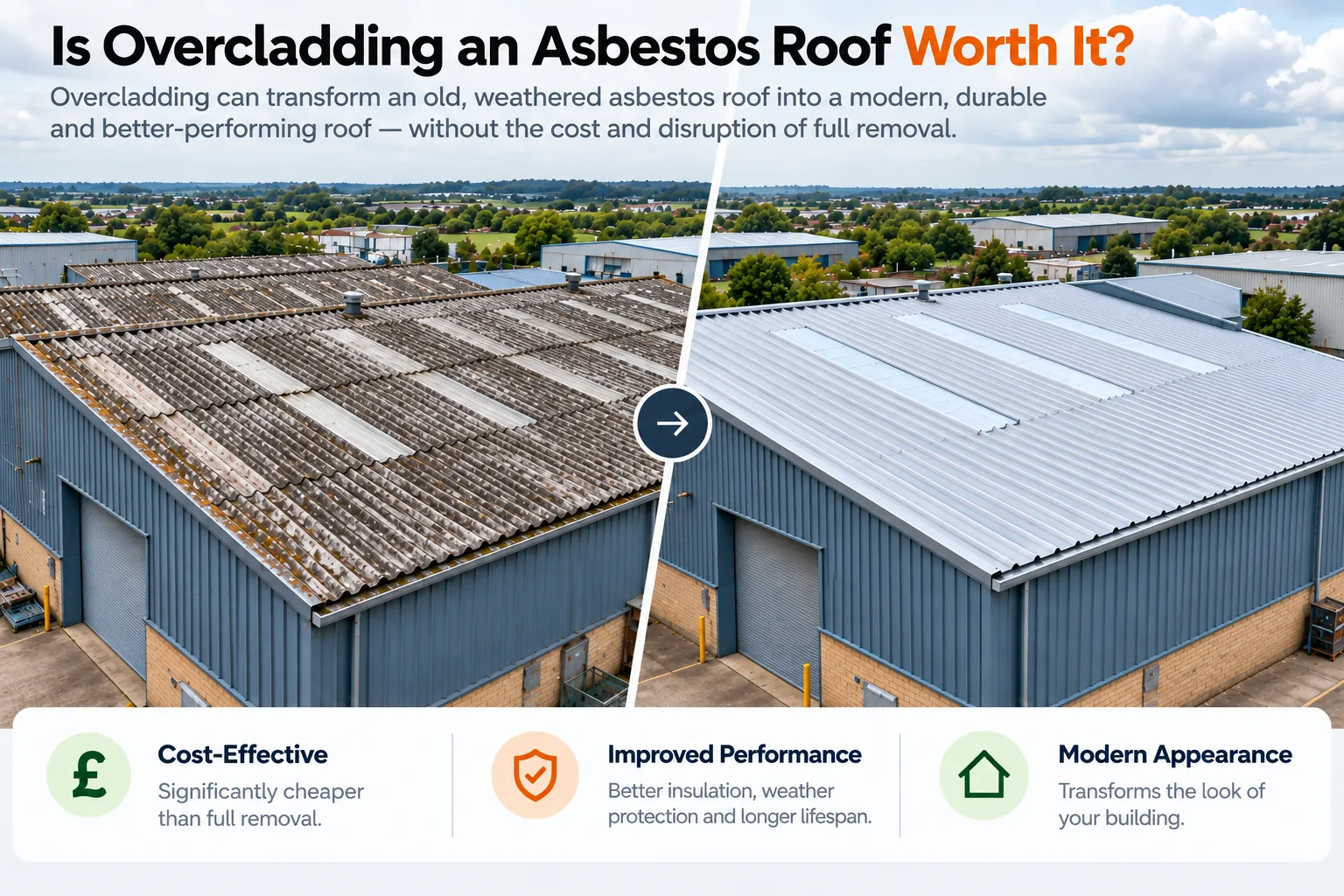
Overcladding converts a degrading roof into a high-performing commercial asset. Extending your roof’s service life, stopping water ingress, and dramatically improving thermal performance through integrated insulation directly protects your bottom line.
When buying or leasing commercial, industrial, or agricultural real estate, aging asbestos roofs are a common sticking point during survey evaluations. An overclad roof backed by clear technical paperwork and long-term warranties reassures buyers, improves EPC ratings, and preserves building market value.
Bridge to Solar-Ready Commercial Roof Systems

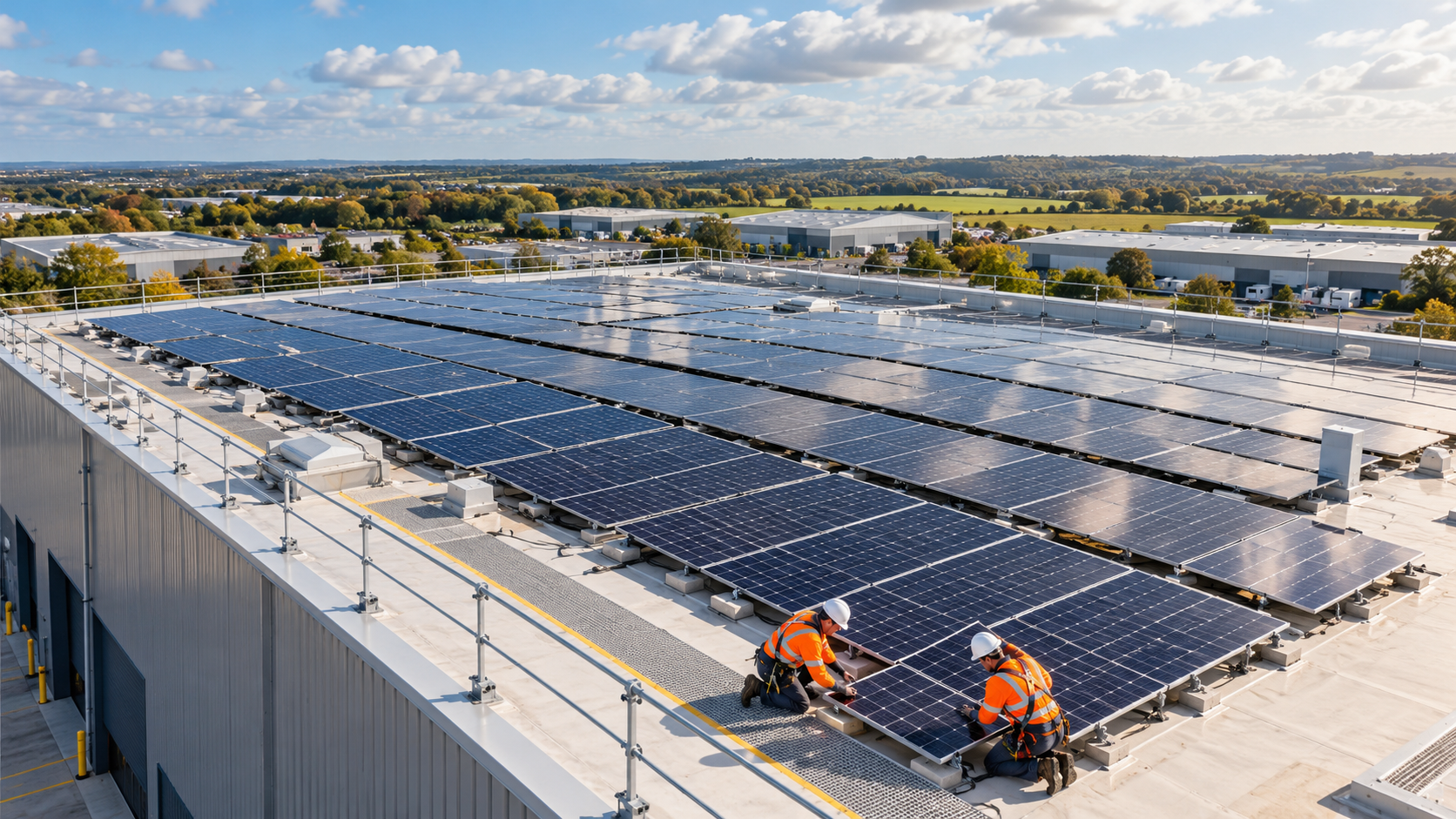
For farm buildings, factories, and commercial warehouses, Orange Eco Roofing frequently bridges overcladding with commercial solar PV integration. Traditional roof repairs or aging asbestos sheets cannot safely support solar arrays. The renewed structural integrity of a newly overclad roof creates an ideal, secure foundation for mounting solar panels, turning a necessary maintenance expense into a self-funding, clean energy asset.
FAQs
How long does asbestos roof overcladding take?
Timelines depend heavily on building footprint, height, access, and weather conditions. Straightforward commercial or farm buildings can take a few days, whereas large industrial complexes require longer phased schedules.
Do I need a permit or approval for overcladding?
Overcladding often falls under permitted development, but altering structural loads or adding insulation to meet thermal requirements typically requires Building Control notification to confirm Part L compliance.
Will overcladding affect commercial building insurance?
Covering an aging asbestos-cement roof with a non-combustible, modern metal skin improves the building’s weather resistance and risk profile, which can assist when securing standard commercial insurance terms.
Is there a risk of asbestos exposure during overcladding?
Overcladding methods are designed to minimize disturbance to existing asbestos-cement panels. By mounting the secondary frame grid onto structural purlins rather than directly breaking or cutting old sheets, exposure risks are managed safely under controlled installation practices.




Leave A Comment